Lost the Plot (History of Allotments)
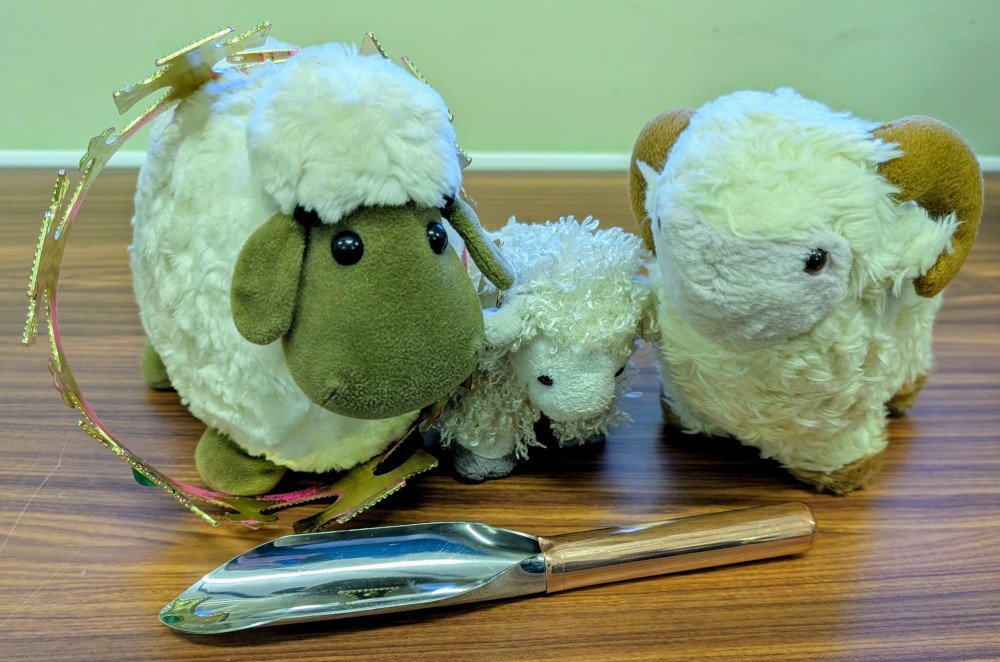
Fiona gave us a very interesting talk on allotments through the ages. She started at a much earlier date than we expected – back in William the Conqueror’s time with strips of land being used for agriculture. These were followed by categorizing land as ‘Common Grazing Land’ and enclosures which effectively excluded people other than the owner. The sheep in the picture are a reference to the sheep which grazed this area when the wool industry was supreme.
Throughout this time there were strips of land where people would grow basic foods to feed their family, letting their best plants flower and set seed so that the seed could be saved and re-sown the next year. When allotments became more formally defined, there were rules about what you could grow, which includes hens and rabbits as well as vegetables and fruit. [The definition of hen was open to interpretation and some allotment holders maintain that it means any female bird]
The popularity of allotments has fluctuated over time. For instance, increasing TV ownership in the 1950s resulted in a reduction of allotment holders, then a series of ‘Grow Your Own’ programs increased popularity again (as did ‘The Good Life’ TV show). Another dip happened when Baking programs took over the airwaves but then COVID, followed by increased working from home, resulted in a rise in allotments once again.
The local council has a responsibility to provide allotments, and locally allotment provision has been improved by halving the allotment size. Fiona has had much experience of allotments both as an allotment holder who started from a very overgrown, compacted and weed-ridden plot, campaigned for allotments after moving to a new area, and after this being in charge of 850 allotments for Cheltenham Borough Council for many years, so she gave us a rounded view of allotments from multiple perspectives.